ORIGANUM VULGARE
|
SYNONYMS |
|
||||||
|
Oregano |
|
||||||
|
Wild marjoram |
|
||||||
|
Prince of herbs |
|
||||||
|
Greek oregano |
|
||||||
|
|
|
||||||
|
TAXONOMY
Oregano, wild marjoram Nil |
|
||||||
|
|
|
BOTANICAL DESCRIPTION
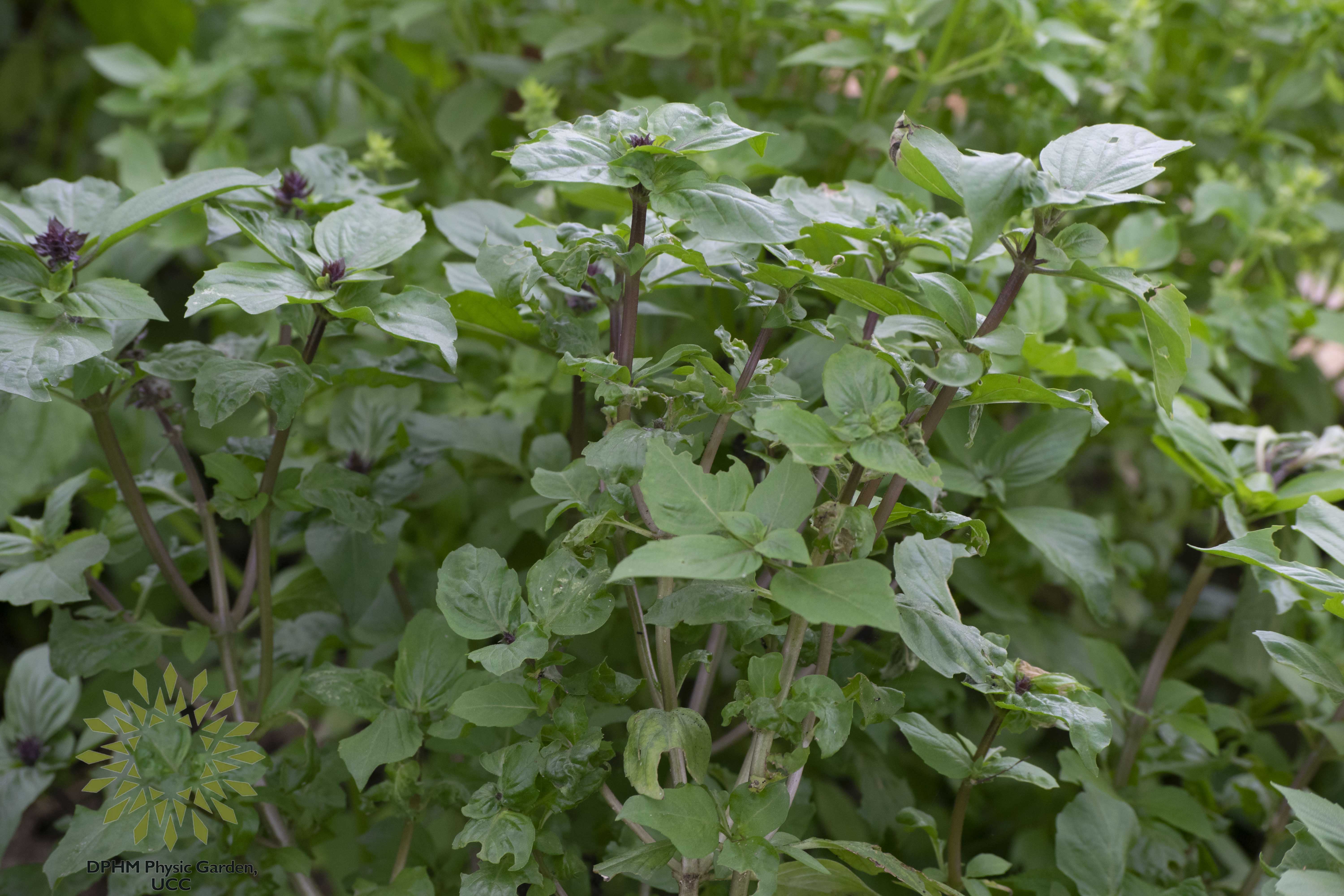
Origanum vulgare, or oregano, is a perennial plant growing 20–80 cm tall with a woody base and herbaceous stems. Its opposite, egg-shaped leaves measure 1–4 cm by 0.5–2.5 cm, with smooth margins and tips that range from rounded to pointed. The plant produces small flowers grouped in terminal and lateral paniculate inflorescences, with five united petals that vary in colour from white to purple, and fused sepals. Each flower contains four stamens and a pistil with two fused carpels. The fruit of oregano consists of small nutlets.
PHYTOCHEMICAL CONSTITUENT
The phytochemicals of Origanum vulgare can be categorised into volatile and non-volatile groups. The volatile components, primarily found in the essential oil, include main phytochemical groups such as monoterpenes and sesquiterpenes. The non-volatile components consist of flavonoids, tannins, glycosides, and sesquiterpenes. Phytochemical investigations reveal variable constituents and concentrations in Origanum vulgare essential oils and extracts, influenced by factors like species, soil conditions, climate, harvest season, and extraction techniques. The most important components of O. vulgare's therapeutic usefulness are its essential oils. The main constituents of Origanum vulgare essential oil include the following chemical structures: (1) Carvacrol, (2) Thymol, (3) Linalool, (4) γ-Terpinene, (5) p-Cymene, (6) β-Caryophyllene, and (7) Germacrene D.
CHEMICAL STRUCTURE

ETHNOBOTANICAL USES
Origanum vulgare (oregano) has various therapeutic uses, including boosting energy, relieving diarrhoea, supporting the stomach, calming the nervous system, acting as a laxative, and treating fractures, numbness, and toothache. Its aerial parts treat colic, sinusitis, blockages, relaxation, and cough relief. Oregano seeds are known for their anticonvulsant, expectorant, and pain-relieving properties, and their efficacy in treating cough, diarrhoea, inflammation, menstrual issues, and urinary tract infections. Oregano (O. vulgare) has been traditionally used to treat various health conditions, including respiratory issues, stomachaches, menstrual pain, rheumatoid arthritis, nutritional imbalances, and urinary disorders. It has been particularly valued for its diuretic and antiurolithic properties. The plant's aerial parts are the most commonly used in these traditional medicinal practices. In addition, oregano is traditionally consumed as teas or tinctures to combat colds, address digestive and respiratory issues, and promote overall well-being. Ointments made from oregano are also used for their effectiveness in treating infections and aiding in wound healing.
ETHNOPHARMACOLOGICAL USES
ANTIMICROBIAL ACTIVITY
Origanum vulgare essential oil exhibits potent antibacterial activity, with the most significant effect against multidrug-resistant Klebsiella oxytoca (MIC of 0.9 μg/mL) and good efficacy against Klebsiella pneumoniae (MIC of 73.5 μg/mL), though Escherichia coli showed higher resistance (MIC >125 μg/Ml). An additional administering Origanum vulgare extract at 200 mg/kg and 400 mg/kg for seven days resulted in a significant decrease in the bacterial load and gross lesions in the lungs and heart of mice infected with multi-drug resistant Staphylococcus aureus. It effectively inhibited virulence factors like morphogenesis, adhesion, and biofilm proliferation by over 50%, and reduced the viability of established biofilms with IC50 values of 7.4 mg/L and 2.8 mg/L for C. albicans strains. O-EO's antifungal effects include disrupting cellular integrity and biofilm formation.
ANTIOXIDANT ACTIVITY
Origanum vulgare aqueous and methanolic extracts effectively inhibit peroxidative processes by neutralising free radicals, blocking peroxidation catalysis, and interrupting lipid-radical chain reactions. They also exhibit anti-glycosylation activity, preventing lipoprotein peroxidation.The methanolic extracts of Origanum vulgare have a higher antioxidant potential (IC50 of 19.9 μg/ml) compared to essential oil (IC50 of 10 μg/ml), while ethanolic extracts are less effective (IC50 > 3 μg/ml). Origanum vulgare ssp. hirtum essential oil (OEO) effectively reduces oxidative stress induced by scopolamine in zebrafish.
ANTI-INFLAMMATORY ACTIVITY
Origanum vulgare essential oil effectively reduces pro-inflammatory markers, including reactive oxygen species (ROS), ICAM-1, iNOS, and COX-2, in human keratinocytes stimulated with interferon-gamma (IFN-γ) and histamine.
ANTI INFLAMMATORY AND ANTINOCICEPTIVE ACTIVITY
Origanum vulgare of the Armenian highlands (OVA) essential oil, extracted via hydro-distillation from fresh oregano plant material, was analysed using gas chromatography-mass spectrometry. The study evaluated its potential through formalin and hot plate tests for antinociceptive effects and assessed cell viability using the MTT assay. Results showed peak concentrations of β-caryophyllene (8.18%) and β-caryophyllene oxide (13.36%) during the blossoming period. A 4% OVA essential oil solution exhibited significant antinociceptive and anti-inflammatory effects in formalin tests (P = 0.003), while the MTT assay indicated approximately 60% cytotoxicity in HeLa and Vero cells at 2.0 μL/mL concentration. The findings suggest that wild oregano from the Armenian highlands, specially harvested during flourishing, holds promise for developing pain-relieving therapies.
TOXICOLOGY PROFILE
High doses of Origanum vulgare's methanolic extract were linked to elevated AST, ALP, and total bilirubin levels, hepatocellular degeneration, and inflammatory cell infiltration indicating potential toxicity and potential liver and renal function impairment.
DRUG-DRUG/ DRUG-HERB INTERACTION
The essential oil of Origanum vulgare exhibited synergistic effects with fluconazole and nystatin, enhancing their antifungal activity.
CLINICALLY VALIDATED USES
A clinical trial with 40 patients assessed the wound healing efficacy of a 3% Origanum vulgare extract ointment. The study found that the ointment significantly reduced bacterial contamination, including a 22% decrease in Staphylococcus aureus, and lowered infection rates in post-surgical wounds.
REFERENCES
Alekseeva, M., Zagorcheva, T., Atanassov, I., & Rusanov, K. (2020). Origanum vulgare L. – a review on genetic diversity, cultivation, biological activities and perspectives for molecular breeding. Bulgarian Journal of Agricultural Science, 26(6), 1183–1197.
Avola, R., Granata, G., Geraci, C., Napoli, E., Graziano, A. C. E., & Cardile, V. (2020). Oregano (Origanum vulgare L.) essential oil provides anti-inflammatory activity and facilitates wound healing in a human keratinocytes cell model. Food and Chemical Toxicology, 144, 111586. https://doi.org/10.1016/j.fct.2020.111586
Bahmani, M., Khaksarian, M., Rafieian-Kopaei, M., & Abbasi, N. (2018). Overview of the Therapeutic Effects of Origanum vulgare and Hypericum perforatum Based on Iran’s Ethnopharmacological Documents. JOURNAL OF CLINICAL AND DIAGNOSTIC RESEARCH, 12(7). https://doi.org/10.7860/JCDR/2018/34177.11728
Capatina, L., Napoli, E. M., Ruberto, G., & Hritcu, L. (2021). Origanum vulgare ssp. Hirtum (Lamiaceae) Essential Oil Prevents Behavioral and Oxidative Stress Changes in the Scopolamine Zebrafish Model. Molecules, 26(23), 7085. https://doi.org/10.3390/molecules26237085
Cervato, G., Carabelli, M., Gervasio, S., Cittera, A., Cazzola, R., & Cestaro, B. (2000). ANTIOXIDANT PROPERTIES OF OREGANO (ORIGANUM VULGARE) LEAF EXTRACTS. Journal of Food Biochemistry, 24(6), 453–465. https://doi.org/10.1111/j.1745-4514.2000.tb00715.x
Cid-Chevecich, C., Müller-Sepúlveda, A., Jara, J. A., López-Muñoz, R., Santander, R., Budini, M., Escobar, A., Quijada, R., Criollo, A., Díaz-Dosque, M., & Molina-Berríos, A. (2022). Origanum vulgare L. essential oil inhibits virulence patterns of Candida spp. And potentiates the effects of fluconazole and nystatin in vitro. BMC Complementary Medicine and Therapies, 22(1), 39. https://doi.org/10.1186/s12906-022-03518-z
Fournomiti, M., Kimbaris, A., Mantzourani, I., Plessas, S., Theodoridou, I., Papaemmanouil, V., Kapsiotis, I., Panopoulou, M., Stavropoulou, E., Bezirtzoglou, E. E., & Alexopoulos, A. (2015). Antimicrobial activity of essential oils of cultivated oregano (Origanum vulgare), sage (Salvia officinalis), and thyme (Thymus vulgaris) against clinical isolates of Escherichia coli, Klebsiella oxytoca, and Klebsiella pneumoniae. Microbial Ecology in Health and Disease, 26, 23289. https://doi.org/10.3402/mehd.v26.23289
Jan, S., Rashid, M., Abd_Allah, E. F., & Ahmad, P. (2020). Biological Efficacy of Essential Oils and Plant Extracts of Cultivated and Wild Ecotypes of Origanum vulgare L. BioMed Research International, 2020, 1–16. https://doi.org/10.1155/2020/8751718
Liaqat, I., Mahreen, A., Arshad, M., & Arshad, N. (2023). Antimicrobial and toxicological evaluation of Origanum vulgare: An in vivo study. Brazilian Journal of Biology, 83, e244551. https://doi.org/10.1590/1519-6984.244551
Ličina, B. Z., Stefanović, O. D., Vasić, S. M., Radojević, I. D., Dekić, M. S., & Čomić, L. R. (2013). Biological activities of the extracts from wild growing Origanum vulgare L. Food Control, 33(2), 498–504. https://doi.org/10.1016/j.foodcont.2013.03.020
Lombrea, A., Antal, D., Ardelean, F., Avram, S., Pavel, I. Z., Vlaia, L., Mut, A.-M., Diaconeasa, Z., Dehelean, C. A., Soica, C., & Danciu, C. (2020). A Recent Insight Regarding the Phytochemistry and Bioactivity of Origanum vulgare L. Essential Oil. International Journal of Molecular Sciences, 21(24), 9653. https://doi.org/10.3390/ijms21249653
Lukas, B., Schmiderer, C., & Novak, J. (2015). Essential oil diversity of European Origanum vulgare L. (Lamiaceae). Phytochemistry, 119, 32–40. https://doi.org/10.1016/j.phytochem.2015.09.008
Oniga, I., Pușcaș, C., Silaghi-Dumitrescu, R., Olah, N.-K., Sevastre, B., Marica, R., Marcus, I., Sevastre-Berghian, A. C., Benedec, D., Pop, C. E., & Hanganu, D. (2018). Origanum vulgare ssp. vulgare: Chemical Composition and Biological Studies. Molecules, 23(8), 2077. https://doi.org/10.3390/molecules23082077
Ragi, J., Pappert, A., Rao, B., Havkin-Frenkel, D., & Milgraum, S. (2011). Oregano extract ointment for wound healing: A randomized, double-blind, petrolatum-controlled study evaluating efficacy. Journal of Drugs in Dermatology: JDD, 10(10), 1168–1172.
Skoufogianni, E., Solomou, A. D., & Danalatos, N. G. (2019). Ecology, Cultivation and Utilization of the Aromatic Greek Oregano (Origanum vulgare L.): A Review. Notulae Botanicae Horti Agrobotanici Cluj-Napoca, 47(3). https://doi.org/10.15835/nbha47311296
Soltani, S., Shakeri, A., Iranshahi, M., & Boozari, M. (2021). A Review of the Phytochemistry and Antimicrobial Properties of Origanum vulgare L. and Subspecies. Iranian Journal of Pharmaceutical Research, 20(2). https://doi.org/10.22037/ijpr.2020.113874.14539
USDA Plants Database. (2024, May 23). [Data base]. Classification for Kingdom Plantae Down to Species Origanum Vulgare L. https://plants.usda.gov/home/classification/46120
 INFORMATION, DATA AND PICTURES ARE COPYRIGHT OF DPHM, SCHOOL OF PHARMACY, UCC.